Ethical Elephant Sanctuaries in Chiang Mai: How to Choose the Right One
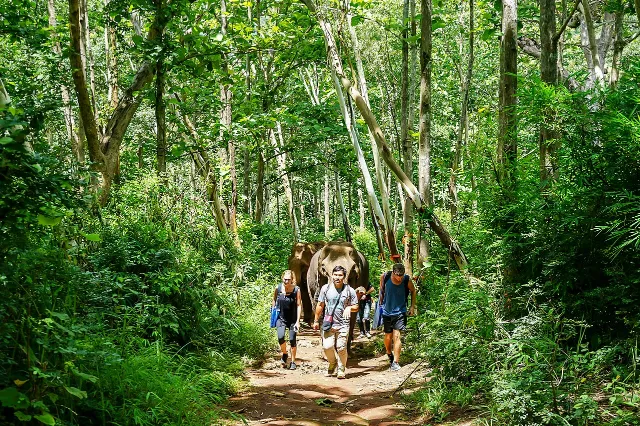
An ethical elephant sanctuary in Chiang Mai is one where you watch, walk near, and feed elephants that move and behave naturally. There is no riding, no shows, no painting, no forced bathing, and no bullhooks. Many places near Chiang Mai use the word "sanctuary" but still offer rides or group bathing sessions, so the name alone tells you nothing. This guide gives you a simple checklist to tell the difference before you book.
The 5-Point Checklist
Before you book, check the operator's own website, not just a booking site listing.
- No riding, ever. Not on a saddle, not bareback, not "just for a photo." A written no-riding policy is the minimum.
- No shows or tricks. No painting, football, dancing, or circus-style performances.
- No forced bathing. Some elephants enjoy water and some don't. At a good sanctuary, elephants choose whether to go into the river, and you watch. Bathing sessions on a fixed schedule for every tour group are a warning sign.
- No hooks or chains during the day. If mahouts carry a bullhook openly during your visit, choose another place.
- A real story for each elephant. Staff should be able to tell you where each elephant came from, for example logging, street begging, or trekking camps.
Red Flags
- "Ride, bathe, and paint" packages in one half-day tour
- Large groups taking turns to bathe or pose with the same elephants
- Baby elephants kept near visitors for photos
- Elephants standing in one place while visitors queue to feed them
Also: If you see an elephant walking on a city street with someone selling food, don't buy it. Street begging is illegal in Thailand, and buying food keeps it going.
Hands-Off vs Feeding Programs
Ethical sanctuaries in Chiang Mai usually follow one of two models:
| Hands-off (observe only) | Feeding and walking | |
|---|---|---|
| What you do | Watch elephants from paths or platforms | Prepare food, feed elephants, walk near the herd |
| Contact | None, unless the elephant comes to you | Supervised and limited |
| Best for | Travelers who want the highest welfare standard | Families and first-time visitors |
Both can be ethical. Hands-off is the strictest, but a well-run feeding program with no riding and no forced bathing is still a good choice.
Well-Known Options
Elephant Nature Park (Mae Taeng)
The best-known rescue center near Chiang Mai, founded by Sangduen "Lek" Chailert in the 1990s. It is in the Mae Taeng Valley, about 60 km north of the city. The park has a strict no-riding policy, and visitors watch the herd, walk near them, and feed them on the elephants' terms. The park also cares for rescued dogs, cats, and buffalo.
- Half-day (morning or afternoon)
- 2,500 THB
- Full day, including the "Hands Off" project
- 3,500 THB
- Children
- 50% for ages 3 to 11, 25% for ages 0 to 2
- Includes
- hotel pickup in Chiang Mai
- Wheelchair users
- half-day programs can accommodate you. Email before booking.
- Afternoon highlight
- the herd often walks down to the river to bathe on the way to their night shelter, but this is never guaranteed.
Book directly on the official website. Popular dates sell out weeks ahead in high season (November to February).
BEES Elephant Sanctuary
A small, fully hands-off sanctuary with no riding and no bathing. It does not offer day trips. Visits are longer stays where you settle into the daily routine. A good choice if you have more time and want a quieter experience.
Other Operators
There are many more sanctuaries around Mae Taeng, Mae Wang, and near Doi Inthanon. Some are excellent and some are not. Use the checklist above for any operator not listed here.
Staying in Mae Hia?
There are no elephant sanctuaries in Mae Hia itself. Most sanctuaries are 1 to 2 hours from the city, in Mae Taeng to the north or Mae Wang to the south-west. Many include free pickup only inside the city, so if you stay in Mae Hia, ask about pickup before you book, or meet at the operator's city office.
What to Bring
- Clothes you don't mind getting muddy, plus a change of clothes
- Walking shoes and sandals
- Hat, sunscreen, and mosquito repellent
- A refillable water bottle
- One small day bag (vans often have limited space)
FAQ
Is it ethical to ride elephants in Chiang Mai?
No. Riding requires breaking an elephant's will through harsh training. No ethical sanctuary offers riding.
Is bathing elephants ethical?
It depends. If elephants choose to go into the water and you watch, that is fine. If elephants are pushed into the river on a schedule for tourist groups, it is not.
How much does an ethical elephant sanctuary cost in Chiang Mai?
At Elephant Nature Park, half-day visits cost 2,500 THB and full-day visits 3,500 THB, including hotel pickup. Other sanctuaries vary, so compare what is included.
Can children visit an elephant sanctuary?
Yes. Half-day programs at Elephant Nature Park welcome all ages, and children get discounted rates.
How do I know if an elephant sanctuary is really ethical?
Check the operator's own website for a written policy: no riding, no shows, no forced bathing, and no bullhooks. Staff should know each elephant's rescue story.